
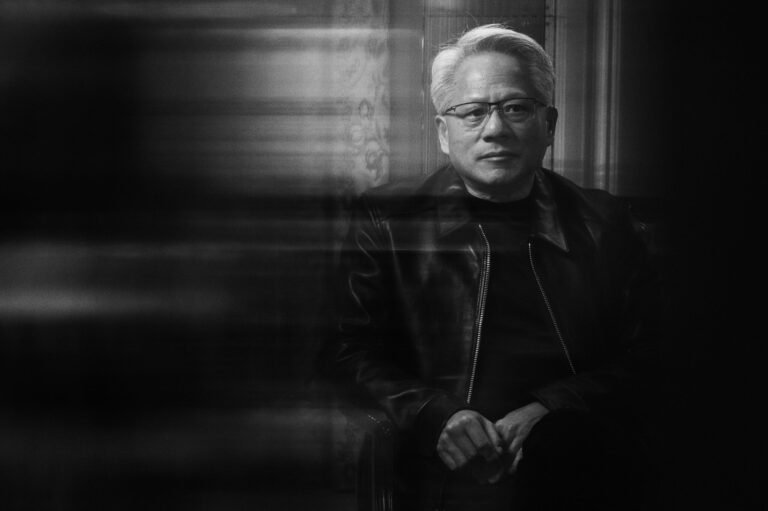

Mainstream news outlets spent the past week obsessing over personal drama following Jensen Huang’s abrupt resignation as Nvidia CEO. However, for cloud architects, AI developers, and hardware buyers, the executive gossip is a distraction from the real Nvidia financial scandal: a two-front structural crisis involving alleged U.S. export-control workarounds in Southeast Asia and hundreds of billions of dollars in circular customer financing.
While commentators fixate on espionage tropes, the underlying mechanics of the $4 trillion fabless chip giant are showing acute stress. With former CFO Colette Kress stepping in as acting CEO, the global AI supply chain faces a sudden reckoning over how Nvidia propped up its historic revenue run—and what happens to GPU pricing and data center capacity if those pillars collapse.
Self-Host Your AI Agents 🛠️
Deploy n8n on a fast Hostinger VPS. Avoid monthly SaaS API limits and own your automation workflow.
What Is the Real Nvidia Financial Scandal?
The real Nvidia financial scandal revolves around two reported financial and regulatory vulnerabilities rather than executive misconduct. First, research and press investigations allege that over 20% of Nvidia’s compute revenue flowed to China via Southeast Asian cloud intermediaries bypassing U.S. export bans. Second, the company reportedly backstopped roughly $500 billion in customer hardware purchases through aggressive vendor guarantees.
Understanding why these two mechanisms matter requires looking past Nvidia’s public image as a pure hardware innovator. Because Nvidia is a fabless semiconductor designer, it manufactures nothing directly; instead, it acts as the central orchestrator of a fragile global monopoly spanning wafer fabrication in Taiwan, memory in South Korea, lithography in the Netherlands, and assembly across Asia.
WARNING — Cloud buyers and AI startups relying on long-term reserved GPU instances from smaller neo-cloud providers face heightened counterparty risk if vendor-backed financing tightens.
1. The Southeast Asian Export Loophole Closes
According to reporting from The Wall Street Journal and analysis by Culper Research’s Christian Lamarco, a substantial portion of Nvidia’s high-margin compute revenue relied on bypassing Washington’s semiconductor restrictions. While U.S. policy under both the Biden and Trump administrations barred frontier AI accelerators from entering China directly, demand allegedly rerouted through neighboring hubs.
Specifically, investigations highlighted two primary channels:
- Intermediary Cloud Shell Companies: Culper Research estimated in May 2026 that more than 20% of Nvidia’s compute revenue originated from Chinese buyers operating through Southeast Asian entities, including Singapore-based cloud operator Megaspeed—a firm previously fronted by Huang Le (also reported as Alice Huang), whose background in Chinese data center development was detailed by Beijing-based outlet Caixin.
- Cross-Border Compute and Smuggling Hubs: The Wall Street Journal reported that Malaysia rapidly emerged as a premier Southeast Asian data center hub largely because its proximity allowed Chinese institutions to rent restricted Nvidia compute clusters remotely or smuggle physical hardware across borders out of reach of U.S. Commerce Department enforcement.
Consequently, the Trump administration’s newly enacted chip restrictions directly target these secondary corridors. Closing that backdoor removes a massive, price-insensitive buyer cohort from Nvidia’s order book overnight.
2. The $500 Billion Vendor-Financing House of Cards
The second half of the Nvidia financial scandal sits directly on the company’s balance sheet. To sustain exponential quarterly growth, Nvidia increasingly acted as both hardware vendor and financier—extending credit guarantees and creative backstops to cash-constrained data center operators so they could afford full-stack Nvidia clusters.
Investor Michael Burry has flagged the scale of these commitments, estimating Nvidia’s financing guarantees to undercapitalized buyers at approximately $500 billion. Internally, these deals—including arrangements reportedly brokered by Huang’s son-in-law, Nico Caprez—triggered sharp friction at the executive level. According to The Wall Street Journal, tensions boiled over during an August leadership meeting where Huang clashed directly with then-CFO Colette Kress over the systemic risks these guarantees posed to Nvidia’s long-term stability.
When a hardware supplier underwrites its own demand, revenue looks unstoppable until end-user AI monetization stalls. With local community resistance slowing hyperscale data center construction across the U.S. and global markets, pre-booked GPU allocations risk turning into stranded inventory.
Stop searching for free graphics. Supercharge your workflow with unlimited access to millions of high-quality vectors, stock photos, PSDs, and AI-generated assets on Freepik.
How This Shakeout Impacts AI Builders and Compute Markets
For developers, infrastructure engineers, and technical founders, Nvidia’s leadership transition and regulatory scrutiny will trigger immediate ripple effects across three critical areas:
Open-Weight vs. Closed-Model Power Dynamics
The geopolitical clash over Nvidia’s supply chain mirrors a deeper architectural battle over who controls artificial intelligence. Both Huang and Chinese AI labs heavily championed open-weight models that developers can self-host locally on consumer or enterprise hardware. Conversely, major U.S. labs like OpenAI and Anthropic—backed by Washington’s regulatory posture—favor closed frontier models metered out via proprietary APIs. Weakening Nvidia’s distribution dominance shifts leverage toward closed-API incumbents and hyperscalers building custom silicon.
Hardware Supply Chain Fragmentation
Nvidia’s vulnerability has accelerated vertical integration among its largest buyers. Google continues scaling its custom TPU infrastructure across the same Asian foundry partners, while Elon Musk launched Texas-based TeraFab in March 2026 in a bid to bring domestic chip fabrication under direct control—reportedly even extending a leadership offer to Huang.
Neo-Cloud Volatility and GPU Pricing
If acting CEO Colette Kress moves to unwind high-risk vendor guarantees and tighten credit terms, smaller GPU cloud providers that relied on Nvidia-backed financing will face a liquidity crunch. While tight credit could stall massive multi-gigawatt data center expansions globally, it may also trigger a short-term secondary market flood of H100/H200 and Blackwell-class compute as over-leveraged operators liquidate capacity.
PRO-TIP — If you are negotiating 12-to-36-month GPU cluster contracts with boutique cloud providers, audit their balance-sheet independence from hardware vendor guarantees and avoid large upfront prepayments.
Don’t Get Trapped by One AI Provider ⚡
Route your workflows dynamically across OpenAI, Claude, and open-source models visually with Make.com.
Frequently Asked Questions
Why did Jensen Huang resign as Nvidia CEO?
According to reports from The New York Times and Crikey, Huang stepped down following revelations of personal relationships involving company employees and Chinese entrepreneur Huang Le, alongside mounting internal and regulatory scrutiny over Nvidia’s export-control compliance and customer financing deals.
Who is currently running Nvidia?
Former Chief Financial Officer Colette Kress has assumed the role of acting CEO, bringing a conservative financial lens to a company facing intense regulatory oversight and balance-sheet exposure.
Will Nvidia GPU prices drop because of the scandal?
In the short term, stricter U.S. export enforcement blocking Southeast Asian intermediaries and tighter vendor credit could reduce artificial demand, potentially easing spot GPU rental rates on secondary cloud platforms.
What Builders Should Watch Next
Over the next two quarters, ignore the celebrity gossip and watch Nvidia’s quarterly financial filings under acting CEO Colette Kress—specifically any write-downs on customer purchase commitments, shifts in regional revenue attribution across Singapore and Malaysia, and revisions to forward data center guidance. Technical teams building AI products should decouple their inference stacks from single-vendor hardware dependencies now, prioritizing portable runtimes that can migrate seamlessly across custom cloud silicon, AMD accelerators, and local quantized hardware if the GPU financing bubble deflates.
The Independent AI Builder Stack
Decouple your AI infrastructure from single-vendor cloud risk with local silicon, private VPS nodes, and multi-model routing.
Apple Mac Studio (M5 Max / M5 Ultra)
Run 70B+ open-weight LLMs locally on your desk with zero cloud token fees or rate limits.
Hostinger KVM VPS Plans
Deploy private AI agents, Docker containers, and vector databases on dedicated NVMe servers without hyperscaler lock-in.
Make.com Automation Platform
Build model-agnostic API routing workflows that switch dynamically across OpenAI, Claude, and open-weight endpoints.



0 Comments