


Every prompt you type into a chatbot isn’t just generating a response; it’s actively feeding a machine. If you don’t take steps to stop AI training on your data, tech companies will use your private conversations to build their next-generation models. This exposes both your personal privacy and corporate confidentiality to unnecessary risk.
Fortunately, you can shut this data pipeline down. You just need to know exactly where the hidden toggles are located.
What Actually Happens During AI Chatbot Training?
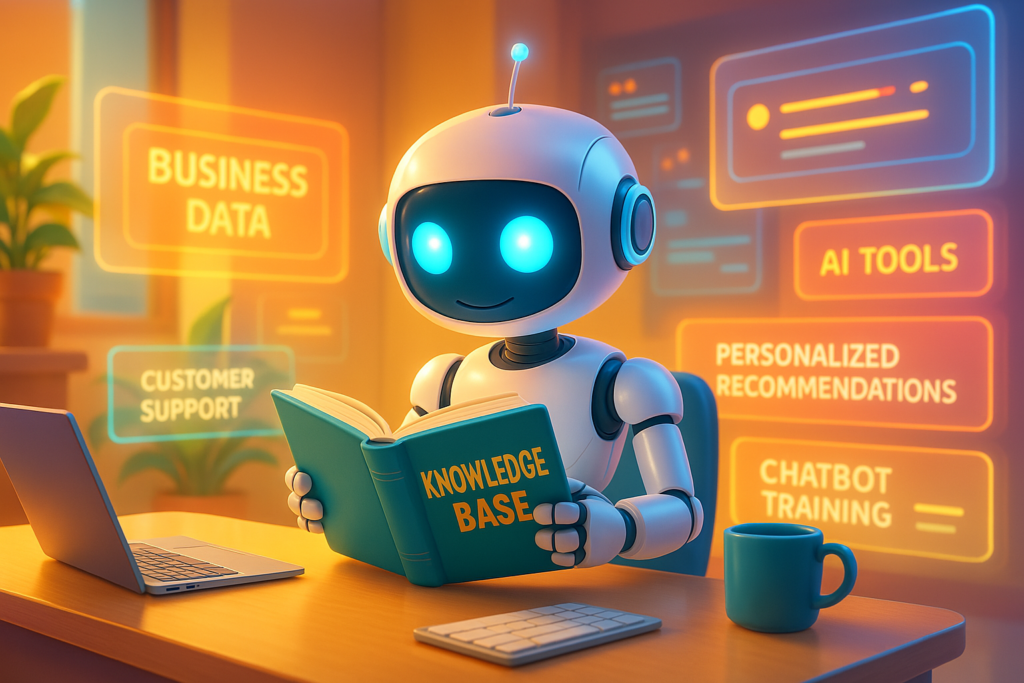
For a chatbot to deliver highly accurate and nuanced responses, the underlying large language models (LLMs) must ingest massive datasets. This continuous assimilation of information is known as “training.”
The more high-quality data an LLM absorbs, the smarter it ostensibly becomes. These algorithms scrape information from public websites, social media, encyclopedias, and video platforms like YouTube—frequently without permission from the original creators.
However, the most intimate data source is the end-user. Every time you submit a prompt, that text is typically weaponized by the AI company to further refine its models. This default behavior leaves your privacy severely compromised.
The Hidden AI Privacy Risks: Why You Must Stop AI Training on Your Data

Leaving default settings enabled is a massive security oversight, particularly if you share sensitive details. If you use chatbots as sounding boards for medical concerns, financial planning, or relationship advice, your most private thoughts are woven directly into the fabric of the model.
AI developers claim they anonymize information before it hits the training pipeline, but users are forced to take them at their word. Even with anonymization protocols, sophisticated bad actors could theoretically use advanced techniques to reverse-engineer prompts and link highly specific health, legal, or financial queries back to your identity.
The danger multiplies exponentially in a professional environment. Feeding client information or proprietary code into a chatbot exposes your employer to severe regulatory and legal liabilities. While the AI might solve your immediate coding bug or format a sales report, it simultaneously commits your company’s internal secrets to its permanent memory.

ORICO Type-C HDD Docking Station
Easily manage your personal data and expand your capacity up to 110TB. Features a stable 12V 4A power supply, strong heat dissipation, and plug-and-play Type-C 5Gbps speeds.
- 5Gbps Type-C
- Silent Cooling Fan
- Up to 110TB Support
How to Opt Out of AI Training Across Major Platforms

Restricting data access will not degrade the quality of the answers you receive from the chatbot. It simply ensures your prompts aren’t permanently absorbed into the underlying LLM.
Most major platforms now provide manual opt-out mechanisms. Here is exactly how to lock down your data across the industry’s four leading tools.
Securing OpenAI’s ChatGPT
OpenAI hides its privacy toggles inside the main settings menu.
- Click on your profile icon to open the settings menu.
- Navigate to ChatGPT data controls.
- Locate the setting labeled Improve the model for everyone.
- Toggle the switch to the Off position.
Locking Down Google Gemini
Google integrates its chatbot permissions with its broader account activity tracking.
- Navigate directly to the Gemini Apps Activity settings page.
- Click the prominent button currently labeled On.
- Select Turn off from the resulting pop-up menu.
- Click Got it in the final confirmation box.
Restricting Anthropic’s Claude
Anthropic keeps the process relatively straightforward within user profiles.
- Click on your profile icon to access the system settings.
- Select the Privacy menu.
- Find and toggle off the Help improve Claude switch.
Protecting Perplexity AI
Perplexity manages model training under its core preference settings.
- Click on your profile icon to open the main settings.
- Navigate to the Preferences menu.
- Toggle the AI data retention switch to the off position.
The Honor System and Advanced Privacy Protocols
Executing these opt-outs theoretically blocks the big four AI giants from monetizing your prompts for future LLMs. However, without independent third-party code audits, users are ultimately relying on the honor system.
Furthermore, opting out of training does not mean your chat history disappears immediately. Companies frequently retain conversational data for a mandated period to satisfy legal or regulatory compliance requirements.
To implement true operational security, thoroughly and correctly redact all confidential data before uploading documents to any AI platform. For an added layer of protection, route your queries through privacy-first proxies like Apple Intelligence or DuckDuckGo’s Duck.ai, which are explicitly designed to obscure your digital footprint from data-hungry models.




0 Comments